
Tools & Tips For Navigating HR+/HER2- Metastatic Breast Cancer (mBC)
Tools
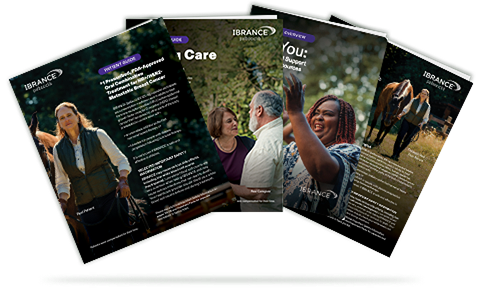

Get Answers & Information
You have questions about IBRANCE®. How could you not? IBRANCE Answers provides treatment tips, lifestyle content, and important information directly to you and your loved ones to help during therapy. You’ll also receive a free starter kit with useful materials like our Patient Guide, Caregiver Guide, Carrying Case, and Personal Journal.
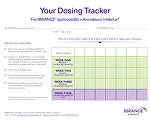
Dosing Tracker
Keep track of your IBRANCE + Aromatase Inhibitor or IBRANCE + Fulvestrant doses by downloading this tracker.
View Full Prescribing Information
Questions To Ask Your Doctor
Print out this guide to help have a productive discussion at your next appointment.

Patient Guide
Want an overview of IBRANCE? Download and print out this guide.

Caregiver Guide
Download this guide for tips and information that may help you care for your loved one taking IBRANCE and yourself.
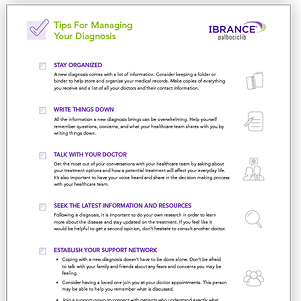
Newly Diagnosed Tips Sheet
Tips and supportive resources you can print or email to yourself and loved ones.
Tips
THERE’S NO EASY WAY TO ADJUST to a metastatic breast cancer (mBC) diagnosis. But there are things you can do to help you—and others—take care of your health.
Give yourself time to adjust to a new normal. Even with all of the changes, there’s still room for fulfillment and the things you love in life.
Below, find tips and approaches for coping with stress, motherhood, relationships, and nutrition.
Coping With Stress
Do your best to take good care of your mental and emotional well-being—you’ll feel better equipped to manage your total health.

Actor Portrayal
Finding ways to manage your stress can help you:
- Reduce tension.
- Sleep better.
- Enjoy your time with the people, places, and things you love.
The key is finding something that really works for you as a stress reducer. Explore—and don’t be afraid to try something new. Some people find relief through relaxation techniques, creating art, exercise, laughter, or spending time with a beloved pet. Consult with your doctor about what might work best for you.

Actor Portrayals
Parenthood
Communicating with your children about metastatic breast cancer can be difficult and complex.
Here are some considerations that may help you figure out the best approach for you and your family:
- Consider what your children need and what you need.
- Consider your children’s ages and level of understanding.
- Consider getting help—you don’t have to do this alone. A social worker or psychiatrist can help you (and your spouse) prepare for conversations, questions, and moving forward together.
Gain insights on building resilience and staying positive with children
Relationships: Dating, Intimacy, And Partners
If you’ve been diagnosed with metastatic breast cancer, you may be thinking about the impact on your relationships.

Actor Portrayals
Dating
Every woman’s experience with mBC is unique and your feelings about dating will be, too. If you’re interested in pursuing dating, you should go for it.
Tips for getting out there:
- Meeting people—You may feel differently about where and how you meet new people. Ask a friend to set you up, or try online dating. If you’re nervous about disclosing your diagnosis, there are dating websites that connect people with health conditions—which may make talking about mBC feel like less of an issue.
- Feeling confident—Treatment can affect your physical appearance and how you feel about it. Accepting these changes can help you feel less focused on them. Bonus: This is a great time to treat yourself to some new makeup, accessories, or clothes that make you feel really good.
- Getting support—Enlist a cheering section! If you’re feeling apprehensive, talk to a close friend who can help you focus on all of the wonderful things you’d bring to any relationship.
- Handling emotions—First things first, be gentle with yourself! Fatigue and stress can make it hard to get enthusiastic about dating, and anxiety or depression may amplify any relationship worries about dating. If dating starts to feel overwhelming, it can also help to focus only on today—and alleviate any pressure about the future.
Sex & Intimacy
Intimacy is an important part of relationships, and you may be worried about how your diagnosis and treatment will impact your sex life—both physically and emotionally.
These concerns are totally normal, and getting informed can help you cope with the changes in your body and mood to figure out what’s right for you and your partner.
You & Your Partner
Navigating an mBC diagnosis with your spouse or partner can sometimes strain your relationship. Where there’s worry, there may be stress, anxiety, and breakdowns in communication. But there’s also the opportunity to work together and forge a new kind of strength and closeness.
You may want to:
- Set aside regular times to talk and check in. Good communication is essential to partnership.
- Find ways to support and unburden your partner.
- Be open about intimacy—any concerns are normal and common.
- Consider couples counseling. You may need help navigating this new chapter.
Get helpful insights and tips on communicating with your partner
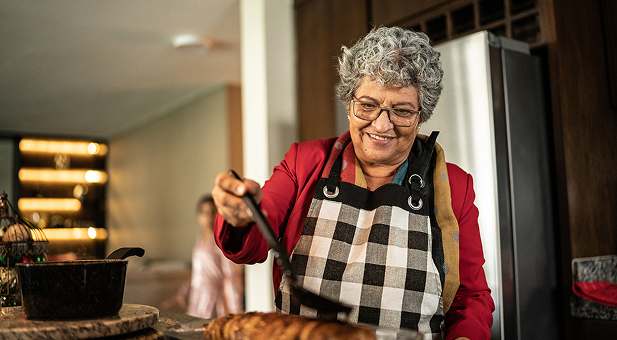
Actor Portrayal
The Importance of Good Nutrition
Eating well is so important during metastatic breast cancer treatment.
Good nutrition can:
- Help your body maintain strength.
- Help repair tissue damage.
Managing your overall health is key while on treatment for metastatic breast cancer. Before making changes in diet or exercise, talk to your healthcare provider.