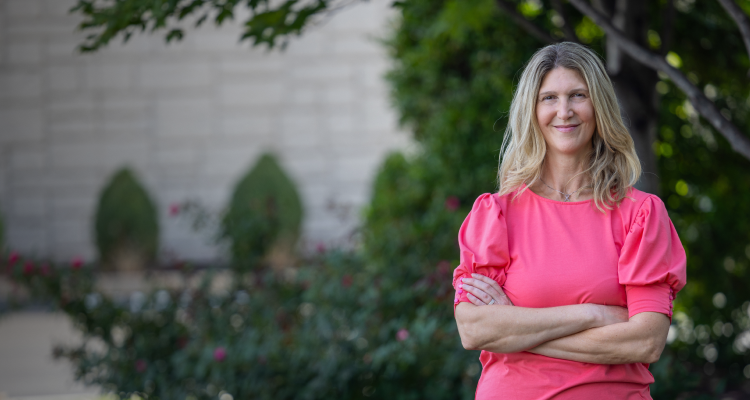
“I had no idea if I’d ever touch the ground again. But I did. And it’s because I was determined to be there for my family, and my family was determined to be there for me.”
Mother Of A Close-Knit Family Shares Her Positive Perspective
ABOUT WENDY, IN HER OWN WORDS:
- I married my childhood sweetheart and have three children and six grandchildren.
- I make the most of the days I have with the people I love.
- I do the hard things to help fight HR+/HER2- mBC and not let it consume me.
When Life’s Storms Hit Without Warning
Tornadoes are one of the most violent and terrifying storms in nature. They can level and blow away your home with no warning. If you encounter one, there's no guarantee of survival. While I haven't lived through one, I've learned that there are other storms in life that are just as frightening and devastating.
One such storm rolled into our lives a few years back. I married my childhood sweetheart, Paul, and we had three wonderful children. Our daughter had her first child, and we were enjoying being grandparents. My youngest son was a senior in high school and would be graduating in a few months. Life was good and hectic. In hindsight, that was the calm before the storm.
A Little Blip On My Radar
One chilly day in March, I was driving home from my mammogram appointment when my husband called to see how it went. As I held back tears, I lied and said it went fine. I was spiraling from the news I had received. Breast cancer, me? No, that can't be! I was in disbelief and terrified of what the future held. I kept replaying in my head what the doctor said to me: “This will just be a little blip on your radar.”
After my early breast cancer diagnosis, we received a crash course on all the stages, types, treatment options, and medications—it was information overload. Not to mention the plethora of decisions to be made in a short time frame. Which oncologist should I choose? Where should I go for treatment? Which surgery should I have? We barely had a chance to digest the diagnosis.
But after completing treatment, this seemed like a little blip on my radar. Things were back on track. Unfortunately, just as forecasters can't predict when a storm will roll in, doctors have no way of knowing if treatment will prevent your cancer from rearing its head again.
The Tumbling That Changed Everything
A couple of years passed. It was a warm day in October, and my husband was out on the deck grilling dinner. I was upstairs in my office finishing up my workday. After logging off, I headed downstairs. Before I knew what was happening, I was tumbling down 13 stairs. Paul came down the hall asking if I was OK. We both looked at my leg and knew I was not. I suffered a compound fracture to my tibia, fractured my fibula, and shattered my ankle.
While I was in the hospital, they did a CT scan. My focus was on the surgery to fix my leg when the doctor came in to give me the results. They found a spot on my right hip which hadn't been there 10 months earlier. They recommended I get a biopsy. At the time, it didn't sink in what they were saying; I just kept thinking, How are we going to fix my leg?
As a result of being unable to walk, several months passed before I was able to get the biopsy done. We got the results on a Zoom call. I remember Paul being tearful and holding my hand as the news we feared was confirmed: the cancer was back and had spread to my right hip. Additional scans also found a spot on one of my ribs.
My Analytical Mind Met An Emotional Storm
After the diagnosis, I buried myself in my work so I wouldn't think about everything. That doesn't mean I ignored it. I also threw myself into research; I was a Quality Assurance Analyst, so I'm very analytical. I searched on the internet and went on all the credible websites.
I reviewed the information my healthcare team gave me, looked at all the treatments, and tried to collect as much info as I could. I took time off from work, so my days weren’t hectic. During this time, it sank in that my diagnosis was incurable.
And with that, I felt the winds picking up as my emotions started swirling, and felt the ground beneath me crumble away. Fear. Sadness. Anger. Frustration. But mostly fear! The tornado had swept me up and was tossing me around, and I had no idea if I'd ever touch the ground again. But you know what? I did. And it's because I was determined to be there for my family, and my family was determined to be there for me.
It’s Not Just My HR+/HER2- mBC Diagnosis
It's normal to think when you first get your diagnosis, Oh my gosh, what does this mean for me? But it doesn't just affect me; it affects everyone around me, and they're also trying to find solid ground as they work through their emotions. Knowing I have their support and that I'm not doing this alone helps get me through each day.
My husband was there for me every step of the way. At the time of my diagnosis, I was also taking care of my mom, who was in assisted living. With my broken leg, Paul was going back and forth to get her groceries and to take her to appointments. He was caring for her AND me—I felt guilty because I couldn't help, and I was dependent on him.
Our family is close-knit with strong bonds. My daughter was a psychiatric nurse but switched to work at a breast cancer center so she could help from a medical perspective. My son was in college, but after the diagnosis, he came home every weekend, and my sister would travel over four hours every couple of weeks to help.
I also had a support network of great friends, coworkers, and neighbors. I was overwhelmed by their love and encouragement. I know not everyone is lucky, so I'm grateful my peeps are standing by me and helping me through it. They are my calm in the storm and my reason to keep fighting!
Finding Strength
My healthcare team was another important part of my network. A month after my diagnosis, the oncologist who had been with me since my first breast cancer diagnosis left the practice. I was sad to lose her but found another one I loved at the same facility.
I didn't think I'd be fortunate to find another great one, but she's been wonderful. When I'm working with my oncologist and healthcare team, I'm honest with them and let myself be vulnerable by sharing my fears and what's going through my mind.
But I also advocate for myself when it comes to treatments. And my team listens! When I talk to my oncologist about a treatment I’m interested in, she’ll talk through all the pros and cons. There's a give and take effort to find a good middle ground.
When my original oncologist suggested IBRANCE, I wasn't ready to try it. But eventually my new oncologist talked to me about why she thought it would be a good choice for me. We talked about the benefits and risks, the serious and common side effects, and how IBRANCE is an oral medication for adults with HR+/HER2- metastatic breast cancer when taken in combination with an aromatase inhibitor. I decided to try it.
I had a rocky start because I’m sensitive to medications and experienced a low white blood cell count, so my oncologist reduced my dose to find the right IBRANCE dose and continues to monitor my counts. We've been pleased with the results; it's helping to keep the cancer at bay for now and I can't argue with that!
See IBRANCE trial results here.
I did experience fatigue and hair loss, and noticed it seems to make me thirsty, so I now hydrate throughout the day. All the worst-case scenarios didn't happen. This is just my experience, and yours could be different. Others may experience serious or common side effects, such as low white blood cell counts, lung problems, or infections. Talk to your doctor about your own experience.
Please see Important Safety Information here.
Breast Cancer Taught Me What Matters
Getting an mBC diagnosis can make you feel like you've been sucked into a tornado. It’s unpredictable, disrupting, and devastating. I never wanted this, but it has given me a new perspective on life. Prioritize what is important—not the laundry or dishes!
What matters is taking advantage of the days I have, making memories, spending time with friends and family, and being present in the moment. Watching my grandchildren grow and getting to know them. Doing the things my husband and I put off, like traveling. And being able to give back, help other people going through this, and trying to give them a positive perspective.
Yes, there are things I can't do like I did before. I'm more tired, don't love getting blood work every four weeks, or being reminded that this diagnosis is here to stay. But the reward is much greater: making the most of the days I have with the people I love. So, I'm going to keep pushing forward. I'm going to do the hard things to help fight this cancer. And I’m not going to let it consume me.
Ambassadors were asked to share their personal stories about IBRANCE and compensated by Pfizer for doing so. All content was accurate at the time of publication and is assessed periodically for accuracy.

Wendy
AMBASSADOR
Wendy was driving home from her mammogram appointment when her husband called to see how it went. She was spiraling from the news she had received and was replaying in her head what her doctor said. Breast cancer, me? No, that can't be! She was in disbelief and terrified of what the future held.